Lake Shawnee Winter Wonderland Car Crashes
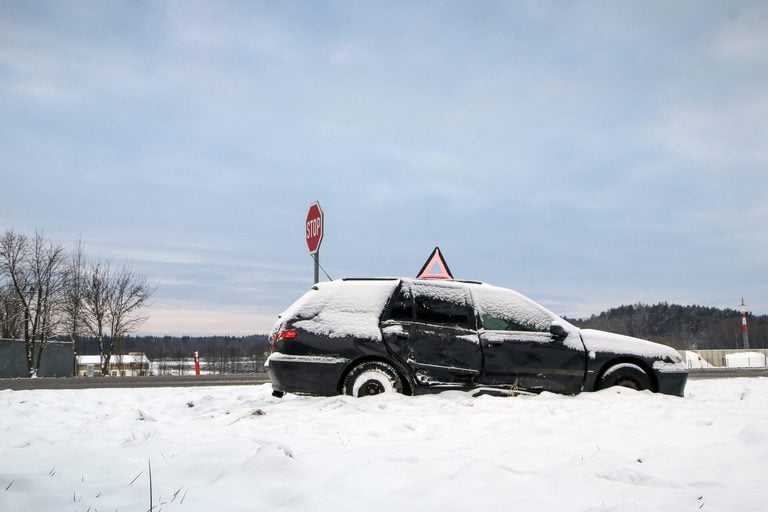
Most people who call us after a Winter Wonderland wreck tell a version of the same story. They were barely rolling, the first light display was right up ahead, and the car behind them didn’t stop in time. Lake Shawnee Winter Wonderland car crashes are usually like that: slow, frustrating, and a lot more painful the next day than anyone expected.
TARC’s Winter Wonderland has been set up at the Lake Shawnee Campground since 1998. The loop runs about two miles, the gate is off SE East Edge Road, and the season starts the night before Thanksgiving and wraps up December 31. Ticket money supports TARC’s services for people in Topeka and Shawnee County with developmental and intellectual disabilities, which is a big part of why it has become one of the busiest holiday traditions in Shawnee County.
Busy means backed up, though, and backed-up traffic after dark is where rear-end collisions come from. If you were hurt in one, it helps to know up front that Kansas injury law doesn’t work the way most people assume, starting with who pays your medical bills.
What Makes the Light Show Traffic So Dangerous?
On weekend nights the line to get in can reach well back onto SE 29th Street, with more cars trying to join from SE Croco Road. Drivers coming from the west are moving at normal speed until they top the hill near the lake and suddenly find stopped traffic in front of them, sometimes without much room to work with.
The roads inside the park don’t have streetlights, and a lot of drivers switch to dimmer lights as they get close to the displays. That’s considerate toward the people around them, but it also means a stopped car can be hard to see until you’re right on it.
Waiting in line for half an hour or more causes its own problems. Drivers start doing other things: reading texts, handing snacks to the back seat, pulling up the camera to get video of the first display. Kansas law already prohibits texting while driving, but people tend to treat a slow line differently, and it only takes a couple of seconds of looking away to roll into someone.
December weather adds to it. Even a light glaze of ice on SE 29th can turn a normal stop into a slide, and drivers merging late from Croco make the spacing even tighter. When one car fails to stop, it often pushes the car it hits into the one ahead, and that’s how three- and four-car chain collisions happen. In those cases, figuring out which driver actually caused each impact is often the main dispute. Our Kansas accident statistics page has more on how often crashes happen around the state.
“I Felt Fine at the Scene”
A lot of people say this after a low-speed SE 29th Street rear-end crash, and it’s usually true at the time. You’re running on adrenaline, the car looks okay, and the priority is getting the kids home.
Pain from these crashes commonly shows up the next day or later. When you’re hit from behind, the seat pushes your body forward first and your head follows a fraction of a second later before snapping back, which strains the soft tissue in your neck. That injury is whiplash, and it’s the one we see most often from Winter Wonderland crashes. The same motion can damage the discs in your neck or lower back, and herniated and bulging discs sometimes take weeks to show their full effect. Treatment can range from physical therapy to injections to surgery.
We also see concussions from heads striking a headrest or window, wrist and shoulder injuries from drivers bracing against the steering wheel, and injuries to children whose car seats weren’t fully secured.
Try to see a doctor within a day or two of the crash. Waiting several weeks can make it harder to get well, and it gives the insurance company an opening to argue your injury came from something else. The timing of your treatment also matters for meeting the Kansas injury threshold explained below.
Who Pays after Lake Shawnee Winter Wonderland Car Crashes?
Your own insurance company pays first, even when the other driver was completely at fault. Kansas is a no-fault state, and every auto policy written here has to include Personal Injury Protection, usually called PIP. According to the Kansas Insurance Department, PIP has to provide at least the following:
| Benefit | Kansas minimum |
| Medical expenses | $4,500 per person |
| Rehabilitation | $4,500 per person |
| Lost wages (disability) | $900 per month for up to one year |
| In-home services | $25 per day for up to one year |
| Funeral and burial | $2,000 |
The medical minimum of $4,500 can be used up quickly. An ambulance transport, an emergency room visit and imaging scans alone can cost close to that amount, and physical therapy or specialist visits come on top of it.
Getting past PIP
Under K.S.A. 40-3117, you can bring a claim against the at-fault driver for pain and suffering only if your injury meets one of the law’s conditions. The one that applies most often is medical treatment with a reasonable value of $2,000 or more. You also qualify if the crash caused a fracture of a weight-bearing bone, a compound, comminuted, displaced or compressed fracture, permanent disfigurement, the loss of a body member, or an injury that is permanent. Once you meet the threshold, you can also pursue medical expenses and lost wages beyond what PIP paid.
As a rough example, a neck strain that resolves after a single urgent care visit usually won’t reach $2,000. A herniated disc treated with injections, or a concussion that requires follow-up with a neurologist, often will. Keeping track of every appointment and bill makes it easier to show where you stand.
Can They Blame You for Getting Rear-Ended?
In most rear-end crashes, the driver in back is found at fault, because Kansas law expects drivers to keep enough distance to stop safely. That doesn’t stop the other driver’s insurance company from looking for ways to shift some of the responsibility to you.
The reason is Kansas comparative fault K.S.A. 60-258a, the Kansas comparative fault statute. Under it, each person involved in the crash is assigned a percentage of fault, and your compensation is reduced by your percentage. If your share is 50% or higher, you can’t recover anything from the other driver.
For example, if your damages total $60,000 and you are found 20% at fault, you would receive $48,000. If you are found 50% at fault, you would receive nothing, which is why insurers will argue over even small details.
In Winter Wonderland cases, the arguments we see most are that the injured driver braked suddenly without a reason, had a brake light out, was driving without headlights, or merged into the line from SE Croco Road without enough room. Evidence usually answers these claims. Photos taken after the crash can show your brake lights working, video can show the car in front of you stopping first, and in a chain collision, a TARC Winter Wonderland traffic accident reconstruction can show that the last driver in line caused every impact.
Evidence Disappears Fast After Holiday Crashes
After a crash in the Winter Wonderland line, the other cars keep moving and the scene is usually cleared within minutes. Dashcam and phone footage may be deleted or recorded over in a matter of days. A Topeka car accident lawyer will try to collect and preserve evidence as soon as possible.
The crash report is usually the first piece. Because Lake Shawnee is in unincorporated Shawnee County, crashes in the park are often handled by the Shawnee County Sheriff’s Office, while crashes on nearby city streets may be handled by the Topeka Police Department. The report should list the drivers, their insurance companies, any witnesses and the officer’s notes on what caused the Topeka holiday light show collision.
Video can be just as important. Many people in line are recording the light displays on their phones, and some vehicles have dashcams, so there’s a good chance someone captured the crash.
Most newer vehicles also have an event data recorder, sometimes called a black box, that records speed, braking and acceleration in the seconds before a collision. This data can show that you were stopped or that the other driver never braked. It can be lost if the vehicle is repaired or sold for salvage, so if your car was seriously damaged, contact a lawyer before it goes to a repair shop.
Photos of the scene, contact information for witnesses and your medical records complete the picture. Your medical records are also the main way to show your injury meets the 40-3117 threshold.
If It Happens to You
Start by checking on your children and anyone else in the car. Call 911 if anyone is hurt. If no one appears injured, it’s still a good idea to call so an officer documents the crash, since injuries that seem minor at first sometimes turn out to be serious.
Turn on your hazard lights, and move out of the line if you can do so safely. Exchange names, phone numbers, license plate numbers and insurance information with the other driver. Take photos of both vehicles, where they came to rest, your brake lights, the road conditions and any visible injuries. Ask the drivers around you whether anyone recorded video, and get their contact information. Somebody was probably filming.
Within a day or two, see a doctor. Report the crash to your own insurer to open the PIP claim. And if the other driver’s insurance company calls wanting a recorded statement, it’s perfectly fine to say you’ll get back to them after you’ve talked to a lawyer.
One deadline to know about: most Kansas personal injury lawsuits have to be filed within two years of the crash (K.S.A. 60-513). Your policy likely has its own, shorter clock for reporting a PIP claim.
Lake Shawnee Winter Wonderland Car Crashes FAQs
Does my insurance or theirs pay first?
Yours. PIP covers your medical bills up to your Topeka PIP insurance limits (at least $4,500 in Kansas) regardless of fault. Their liability coverage comes into play once your losses go past PIP and your injury meets K.S.A. 40-3117.
Can I sue the person who rear-ended me near Lake Shawnee?
If you’ve had $2,000 or more in medical treatment, or an injury like a broken weight-bearing bone, disfigurement or a permanent injury, yes.
What if they say I stopped short?
You can still recover as long as you’re under 50 percent at fault. Your award just gets cut by whatever your share turns out to be. Video and black box data usually settle that fight.
What about my kids in the back seat?
Children riding as passengers are almost never assigned fault. Your family’s PIP covers their treatment first, and they may have a separate claim of their own. Minors’ claims come with a few extra rules in Kansas, so it’s worth a call.
Help after Lake Shawnee Winter Wonderland Car Crashes
Nobody plans their holiday around an insurance claim. If a careless driver hit you on the way into Winter Wonderland, let somebody else deal with the adjusters, the PIP math and the blame game.
Patterson Legal Group handles crash cases for families across Topeka and Shawnee County. We’ll get the report, chase down the video and EDR data, track your treatment against the threshold, and push back hard if an insurer tries to make this your fault. To learn more and speak with a member of our team, get in touch now by giving us a call, filling out a secure online contact form, or using our LiveChat service.
The information on this blog is for informational purposes only. It is not meant to serve as legal advice for an individual case or situation. This information is not intended to create an attorney-client relationship nor does viewing this material constitute an attorney-client relationship.