Kansas Farm Equipment Accidents: Rural Highway Laws
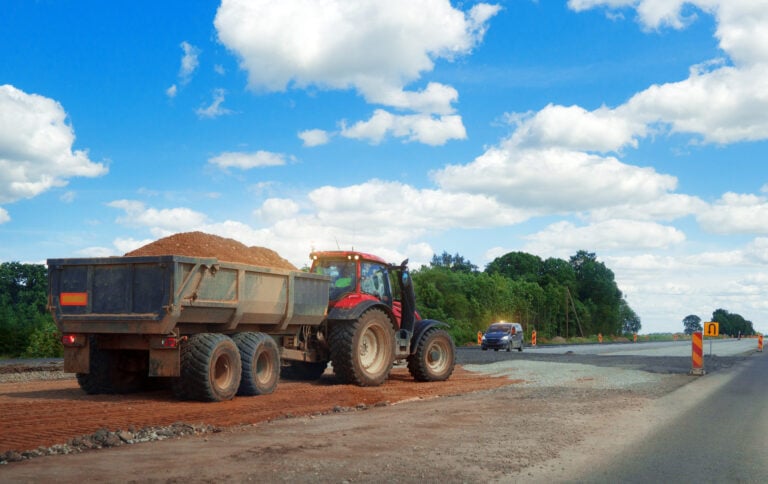
In the spring each year in Kansas, the environment changes. Equipment is removed from sheds. Tractors begin to travel on rural roads. Rural two-lane roads become populated with farm equipment that can extend twenty feet in width and travel fifteen miles an hour. While most motorists recognize the need to slow down and provide adequate space, things become much more difficult when accidents occur. That’s why the Kansas farm accident lawyers here at Patterson Legal Group are here with this guide on Kansas farm equipment accidents.
When Are Risks Greatest for Kansas Farm Equipment Accidents?
The beginning of April until early June is the riskiest period for an accident involving farm equipment in Kansas. This equipment must be transported between fields, which could mean traveling many miles on public roads. Movement during early morning and early evening is not uncommon, which means visibility might be an issue.
Another risk factor is the speed disparity between vehicles. A motorist approaching a hilltop or emerging from a turn who spots a tractor ahead may not have sufficient time to stop.
Both rear-end collisions and illegal passes are the most frequently occurring accidents. Both pose important concerns regarding who is responsible under the law, and there is typically no simple answer.
Slow Moving Vehicle Emblem Requirements in Kansas
According to Kansas statute K.S.A. 8-1717, any machinery or vehicles constructed for operation below 25 miles per hour must exhibit a slow-moving vehicle emblem while operating on public roadways.
The purpose of Kansas slow-moving vehicle emblem requirements is quite simple—it gives drivers sufficient advance notice to slow down. An SMV sign that is mounted correctly, clean, and visible against its background can be detected from as far as 500 feet away, which is about how much distance one needs to reduce speed on a flat surface at highway speed levels.
If the operator of the farming equipment fails to mount the proper Kansas slow-moving vehicle sign, they might be partially or fully liable. Such a sign can completely fade after some time spent under direct sunlight. This aspect of Kansas SMV requirements is not overlooked by either courts or insurance adjusters.
Reflective tape, flashing amber lights, and escorting cars for large moves are usually optional but, if not provided, can become a factor in determining fault during an accident.
Farm Equipment Right-of-Way on Two-Lane Rural Roads
The State of Kansas does not grant right-of-way to the owners and operators of farm equipment regardless of the vehicle size. However, there are specific duties imposed on both sides.
According to K.S.A. 8-1525, a motor vehicle traveling at a speed less than the normal speed of traffic must not obstruct traffic unnecessarily. If five or more motor vehicles line up behind a slow-moving vehicle, the operator should move out of the way if feasible and permit other vehicles to pass.
This rule comes with a caveat. The refusal of the equipment operator to give way when it is safe to do so and forcing another vehicle into making a risky pass may contribute to the accident.
In Kansas, motorists must abide by the speed limit, follow another vehicle appropriately, and alter their driving behavior based on rural road conditions such as visibility restrictions, curvature, and hilly terrain. Passing on a hill and in areas without passing lanes makes motorists responsible for the accident.
Injuries Caused by Agricultural Machinery Collisions
Collisions between passenger cars and agricultural machinery can result in severe injuries, such as:
- TBI
- Spinal fracture/trauma
- Crushing injuries
- Multiple traumatic injuries and fractures
- Wrongful death
The disparity in size and weight between passenger vehicles and farm equipment can create catastrophic injury risks, even during low-speed accidents. Medical bills, lost wages, and physical therapy fees are costly, especially since agricultural equipment insurance policies may exclude certain damages.
What to Do Following Kansas Farm Equipment Accidents
In case of a crash between a motor vehicle and farm equipment in Kansas, there are several things that can be done right away in order to ensure one’s well-being and rights:
- Dial 911. Do this even if the injuries appear to be minor. Medical documentation is important for your case.
- Photograph the accident scene. Take pictures of the equipment involved, its SMV emblem, skid marks, traffic signs, and vehicles involved.
- Collect contact information. Note down the contact details of the equipment driver and their employer, as well as any eyewitnesses.
- Do not make a recorded statement until consulting a Kansas tractor accident lawyer.
Here to Help with Kansas Farm Equipment Accidents
At Patterson Legal Group, we’re here to offer the information you need on Kansas farm equipment accidents, and we’re ready to help you if you’ve been injured in such a wreck. Our dedicated team of litigators and trial lawyers has a proven track record of success in securing compensation for those in Kansas, as well as in Missouri, Oklahoma, and Colorado. We will fight for you every step of the way.
Get started today with a free consultation by calling us at 888-687-2400 or going online through our secure contact form. You can also connect with our LiveChat representatives.
We work under a “No Win, No Fee” promise, so you won’t pay anything unless we win. Reach out today and take the first step toward getting the money you deserve.
The information on this blog is for informational purposes only. It is not meant to serve as legal advice for an individual case or situation. This information is not intended to create an attorney-client relationship nor does viewing this material constitute an attorney-client relationship.